Ainvest Option Flow Digest - 2026-01-21: $67M Institutional Positioning as Intel Earnings Loom Tomorrow
Executive Summary
Total Flow: $67.0M across 8 tickers
Today's options flow reveals a fascinating story: Smart money is preparing for a pivotal week. With Intel earnings hitting tomorrow (Jan 22) and a string of catalyst-rich names on deck, institutions deployed nearly $70 million in strategic positioning. The standout? A massive $24.4M GLD call spread at all-time highs signals portfolio hedging concerns, while a $5.7M QRVO merger play shows conviction in the February shareholder vote.
Key Themes:
- Earnings Season Heats Up: INTC (tomorrow), QRVO (Feb 4), QLYS (Feb 5), DDOG (Feb 13), SMH components (Nvidia Feb 25)
- Merger Arbitrage: QRVO's Skyworks deal vote on Feb 11 attracting significant call spread activity
- Precious Metals Divergence: GLD call spreading at ATH vs PAAS short call LEAPS - bulls vs premium sellers
- Small-Cap Hedging: $10.2M IWM put protection as Russell 2000 tests record highs
Today's Combined YTD Performance
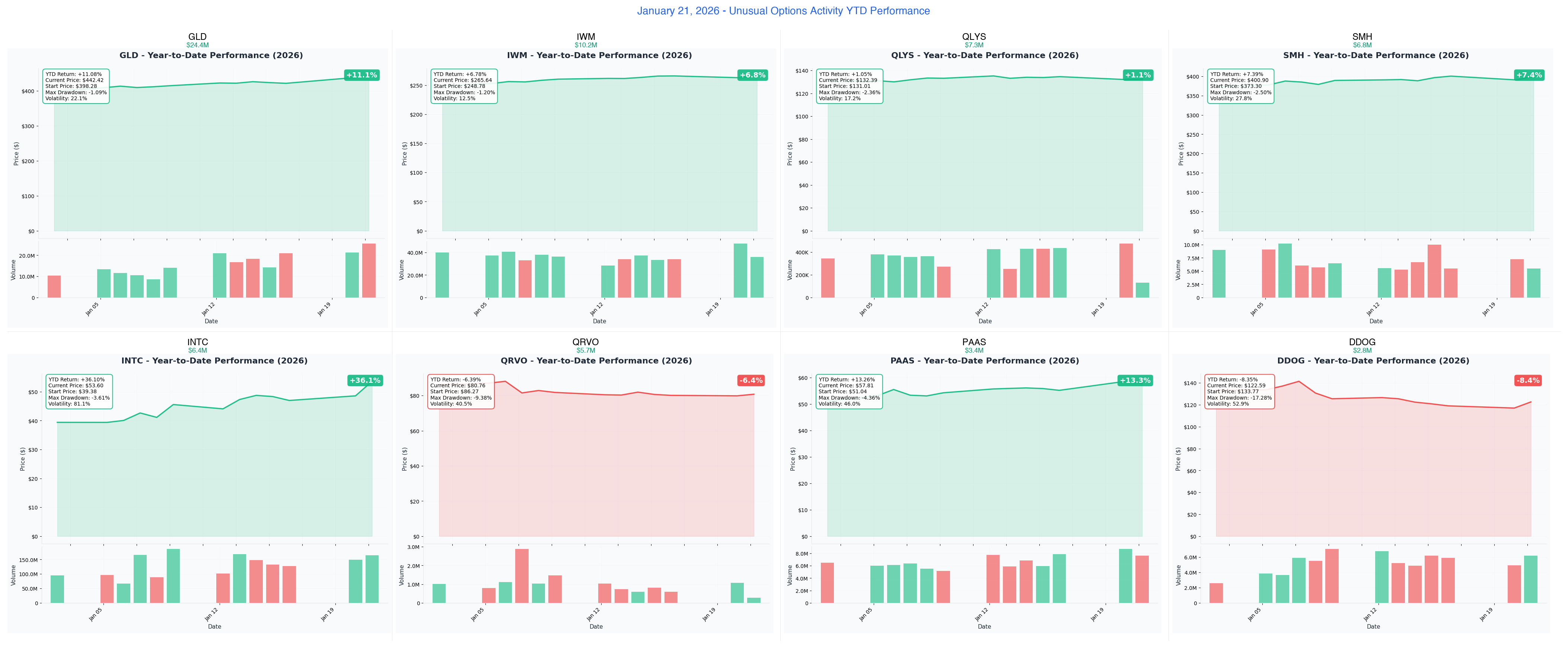
Quick Summary Table
| Ticker | Premium | Expiration | Catalyst | Option Play | What It Means |
|---|---|---|---|---|---|
| GLD | $24.4M | Mar 2026 | At All-Time Highs | Bullish Call Spread 270/290 | Portfolio rebalancing, capturing upside while defining risk |
| IWM | $10.2M | Feb/Mar 2026 | Record Highs | Put Protection 220/225 | Institutional hedging at small-cap peak |
| QLYS | $7.3M | Feb 2026 | Q4 Earnings Feb 5, FedRAMP | Bullish Call Spread 145/160 | Betting on cybersecurity breakout |
| SMH | $6.8M | Jun 2026 (Triple Witch) | Intel Jan 22, Nvidia Feb 25 | Call Spread 245/255 | Semiconductor rally through H1 2026 |
| INTC | $6.4M | Jan/Feb 2026 | Q4 Earnings TOMORROW (Jan 22) | Three-Way Call Adjustment | Rolling exposure ahead of critical print |
| QRVO | $5.7M | Feb 2026 | Q3 Earnings Feb 4, Merger Vote Feb 11 | Call Spread 95/110 | Merger approval conviction play |
| PAAS | $3.4M | Jan 2028 (LEAPS) | Silver at 10-Year Highs | Short Call LEAPS $70 | Premium collection, capping upside at $70 |
| DDOG | $2.8M | Aug/Sep 2026 | Q4 Earnings Feb 13 | Put Roll 110→120 | Raising protection floor pre-earnings |
Urgency Section: What Needs Attention NOW
IMMEDIATE (24-48 Hours)
INTC - Intel Q4 Earnings TOMORROW (Jan 22 After Close)
- The Trade: $6.4M three-way call adjustment (closing Jan $22 calls, opening Feb $22-24 call spread)
- Why It Matters: CEO Lip-Bu Tan's first full quarter, IFS foundry updates, 18A process announcements expected
- The Signal: Institutions are repositioning, not panicking. Rolling into spreads suggests cautious optimism
- Risk: 5.8% implied move - stock could gap significantly either direction
THIS WEEK
QRVO - Dual Catalyst Convergence
- Q3 Earnings: February 4 (Before Market)
- Skyworks Merger Vote: February 11
- The Trade: $5.7M call spread targeting $95-110 by February expiration
- Why It Matters: 14.6% upside to $110 strike represents significant conviction in merger approval
Thematic Breakdown
Theme 1: Earnings Season Positioning
Four of today's eight names have earnings within the next 30 days. Here's how smart money is positioned:
| Ticker | Earnings Date | Days Out | Position Type |
|---|---|---|---|
| INTC | Jan 22 | 1 day | Call spread roll (bullish lean) |
| QRVO | Feb 4 | 14 days | Call spread (bullish) |
| QLYS | Feb 5 | 15 days | Bullish call spread |
| DDOG | Feb 13 | 23 days | Put roll (raising protection) |
Interpretation: The pattern is clear - institutions are buying upside through spreads rather than naked calls. This suggests confidence but with defined risk. The DDOG put roll is particularly interesting - raising the floor from $110 to $120 shows they expect the stock to hold higher levels.
Theme 2: Macro Hedging at Record Highs
Two massive hedging plays tell the same story from different angles:
GLD ($24.4M): Buying call spreads at gold's all-time high. This isn't a "gold is going to the moon" trade - it's portfolio insurance. The spread structure (270/290) caps upside at 7.4% while paying ~$7.50 debit.
IWM ($10.2M): Put protection on small caps at record territory. The 220/225 put spread structure provides downside protection without the theta bleed of naked puts.
What This Means: Big money is nervous about equity valuations but not bearish enough to short. They're buying insurance while staying long.
Theme 3: Semiconductor Confidence
Both SMH and INTC flows suggest conviction in the chip space:
- SMH: $6.8M call spread targeting June Triple Witch (245/255) - a 5-month bet on continued semiconductor strength
- INTC: $6.4M call roll - staying engaged through earnings despite Intel's troubled narrative
The June expiration on SMH is notable - it captures Intel earnings (tomorrow), AMD (Jan 28), Nvidia (Feb 25), and multiple Taiwan Semi updates.
Theme 4: Precious Metals Divergence
An interesting contrast in precious metals positioning:
GLD (Bullish): $24.4M call spread - institutions adding upside exposure PAAS (Neutral/Bearish): $3.4M short call LEAPS at $70 - betting silver won't surge to $70 by 2028
This divergence suggests institutions see gold as the safer haven play while silver's industrial component creates more uncertainty.
Expiration Categories
Monthly OPEX (February/March 2026)
- INTC: Jan/Feb monthly expirations
- QRVO: Feb 21 expiration
- QLYS: Feb 21 expiration
- GLD: Mar 21 expiration
- IWM: Feb/Mar expirations
Quarterly Triple Witch (June 2026)
- SMH: Jun 19 expiration - 5-month semiconductor thesis
LEAPS (Aug 2026+)
- DDOG: Aug 2026, Sep 2026 expirations
- PAAS: Jan 2028 - 2-year premium collection
Action Plans by Investor Type
For the YOLO Trader (High Risk Tolerance)
Top Pick: INTC ahead of tomorrow's earnings
Intel earnings drop tomorrow after close. The $6.4M three-way adjustment suggests institutional conviction in upside.
Potential Play:
- Feb $22 calls (at-the-money)
- Risk: Entire premium (earnings are binary)
- Why: CEO Lip-Bu Tan's turnaround story, 18A foundry updates, potential partnership announcements
- WARNING: This is a binary event. Size appropriately - never risk more than you can lose entirely.
Alternative: QRVO call spread mimicking institutional flow
- Feb $95/$105 call spread
- Defined risk, plays dual catalyst (earnings Feb 4 + merger vote Feb 11)
For the Swing Trader (2-4 Week Horizon)
Top Pick: QLYS ahead of Q4 earnings (Feb 5)
The $7.3M bullish call spread (145/160) offers a compelling risk/reward:
The Setup:
- Stock: ~$161 (near resistance)
- Catalyst: Q4 earnings Feb 5
- Secondary Catalyst: FedRAMP authorization momentum
- Smart Money: Targeting 11.5% upside to $160 strike
Potential Trade:
- Feb $150/$160 call spread (scaling down from whale's position)
- Entry: Current levels or on any pullback to $155
- Target: Pre-earnings run or gap through $170 on beat
- Stop: Close below $150 support
Risk Management: Define your loss before entry. Spreads naturally cap your risk.
For the Premium Collector (Income Focus)
Top Pick: Follow the PAAS trade logic
A trader sold $70 strike LEAPS calls expiring January 2028 for $3.4M premium. Silver at $33.99 would need to rally 106% for these to be tested.
Potential Trade (Smaller Scale):
- Sell PAAS Jan 2028 $70 calls for ~$0.98 premium
- Breakeven: $70.98 (107% above current price)
- Assignment risk: Very low unless silver explodes
- Annual yield: ~3% on notional
Alternative - More Conservative:
- Sell DDOG covered calls at elevated IV ahead of earnings
- Target: Feb expiration, ~10% OTM strikes
- Capture: Elevated premium from earnings IV
Key Principle: Premium selling works best when you're comfortable owning the underlying at your strike price.
For the Entry-Level Trader (Learning Focus)
Educational Focus: Understanding the INTC Three-Way Trade
Today's INTC flow demonstrates a sophisticated adjustment:
- Closed: Jan $22 calls (took profits or cut losses)
- Opened: Feb $22 calls (extended duration)
- Sold: Feb $24 calls (funded the roll, capped upside)
Why This Matters:
- The trader didn't just "buy calls" - they structured a defined-risk position
- Rolling = extending your thesis when time works against you
- Selling the $24 strike = reducing cost basis, accepting capped gains
Your Learning Trade:
- Paper trade or very small position in a call spread
- Pick something with an upcoming catalyst (QRVO is educational - merger + earnings)
- Track: How does the spread behave vs. a naked call?
Key Lesson: Spreads teach discipline. You know your max loss and max gain before you enter.
Risk Management Reminders
- Position Sizing: No single trade should risk more than 2-5% of your portfolio
- Earnings Are Binary: The INTC and QRVO plays could move significantly either direction
- Merger Risk: QRVO's Skyworks deal could face regulatory surprises
- Hedges Cost Money: GLD and IWM flows are insurance, not profit-seeking trades
- LEAPS Decay Slowly: But they still decay - the PAAS seller has 2 years of patience priced in
Tomorrow's Watchlist
| Time | Event | Ticker Impact |
|---|---|---|
| Pre-Market | Market opens with potential overnight Asia/Europe moves | GLD, SMH |
| After Close | INTC Q4 Earnings | INTC (direct), SMH (indirect) |
| After Close | INTC Earnings Call (turnaround updates) | Semiconductor sentiment |
Data Sources
All flow data sourced from AInvest Option Flow - Unusual options activity detection with real-time institutional flow tracking.
Individual ticker analysis available on AInvest Labs.
This newsletter is for educational purposes only. Options trading involves significant risk of loss. Past flow activity does not guarantee future results. Always conduct your own research and consider your risk tolerance before trading.
Posted: January 21, 2026 Total Flow Analyzed: $67.0M Tickers Covered: DDOG, GLD, INTC, IWM, PAAS, QLYS, QRVO, SMH